
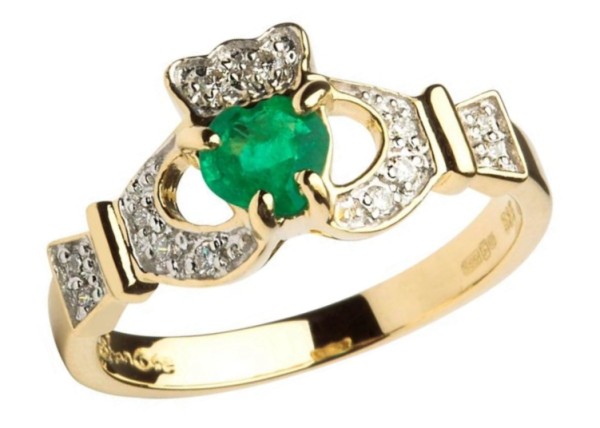
The Claddagh Ring is the most famous piece of traditional Irish jewellery and an iconic symbol of Galway. The ring incorporates a heart in the middle, representing love. Friendship is symbolized by the encircled hands at either side. The crown on top signifies the importance of loyalty in relationships. These three elements form a powerful symbol of commitment and enduring affection.
The story of the Claddagh ring originates from the old Claddagh fishing village west of Galway city. It dates back to the mid 1600’s and has so much folklore and myth attached to it. The most commonly believed the story credits Claddagh-man Richard Joyce. He was sold into slavery to a goldsmith in the West Indies, who kindly trained him in his Jewelry craft. Later, King William III of England ordered the release of all subjects of the empire from slavery. Joyce then returned to Galway where he set up as a goldsmith in 1750 making these unique rings.
The ring has maintained its popularity because of its curious history and unique design. Dignitaries including Queen Victoria, Queen Alexandra and King Edward VII have worn the ring.
The Claddagh ring has great sentimental appeal and according to Irish custom, there are various ways of wearing it! Wear the ring on the left hand with the heart facing inwards. This means you are in a committed relationship. In other words, your heart is taken! If you are still single, wear the ring on the right hand. The heart should point out. If you are married, wear the Claddagh ring on the left hand. The heart on the ring is now pointed towards your own heart. This shows you are committed to your partner!
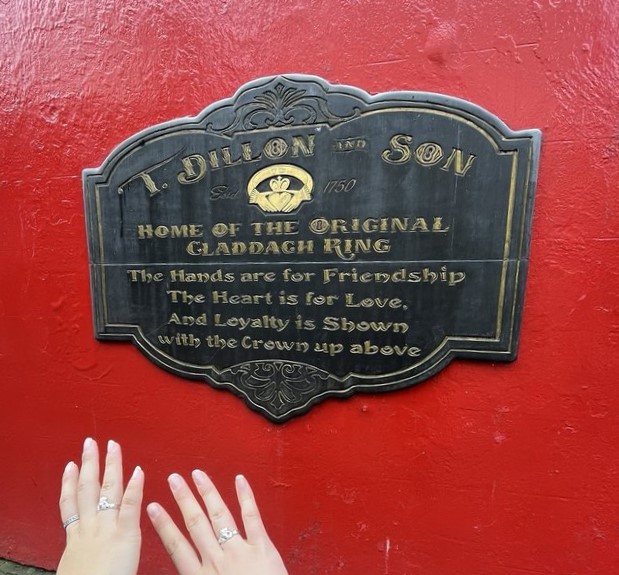
In February 2022, a new poem entitled ‘Claddagh Ring’ was unveiled. Dublin poet Nessa O’Mahony wrote it. The poem is displayed on the wall of Dillon Jeweler’s, the oldest jewelers in the country. The shop is located on the corner of Cross Street and Quay Street in the city’s Latin Quarter.
Our Walking Tours of Galway visit the Claddagh Ring store in Quay Street. This is located in the heart of the Latin Quarter. Our guides explain this iconic ring’s folklore.
 Western Tours and Tales