
Daniel O’Connell: The Liberator of Ireland by Peaceful means
In the annals of Irish history, few names shine as brightly as that of Daniel O’Connell. O’Connell was a lawyer, statesman and champion of civil rights. He was the undisputed leader of Ireland’s Roman Catholic majority during the first half of the 19th century. Revered as “the Liberator”, he played a pivotal role in dismantling centuries of discrimination against Catholics. This effort resulted in the landmark Catholic Emancipation of 1829. His legacy remains a symbol of Ireland’s long and grueling journey toward justice and equality.
The Shadow of the Penal Laws
To understand Daniel O’Connell’s impact, one must first understand the oppressive framework of the Penal Laws. These laws gripped Ireland from the late 17th century. These laws were designed to exclude the Catholic majority, stripping them of basic civil liberties. Catholics were prohibited from holding public office and owning firearms. They were also banned from receiving education and intermarrying with Protestants. Catholics could not inherit land in the same way as Protestants.
The laws were not merely legal restrictions, they were tools of cultural suppression. Their aim was to erode the influence of Catholicism and ensure Protestant dominance in all spheres of life. By the time O’Connell came of age, these laws had relegated Catholics to a subordinate status in their own land.
The Rise of a Legal VIP
Born in 1775 in Cahersiveen, County Kerry, Daniel O’Connell was raised in a relatively affluent Catholic family. He received a robust education in France and later trained as a barrister in London. His legal acumen and rhetorical prowess quickly established him as one of Ireland’s foremost lawyers.
But O’Connell was more than a skilled advocate in the courtroom. He was a visionary with an unyielding belief in the power of peaceful protest. He also believed in constitutional reform. Unlike many of his contemporaries who favored insurrection, O’Connell chose the pen over the sword, the ballot over the bullet.
The Catholic Association
In 1823, O’Connell founded the Catholic Association, a mass movement aimed at securing civil rights for Catholics. The model galvanized national support, gave Catholics a unified voice and became a formidable political force. It organized mass rallies, distributed pamphlets and lobbied Parliament. O’Connell’s charismatic leadership kept the movement within the bounds of British rule in Ireland.
The Clare Election of 1828: A Turning Point
O’Connell’s campaign reached its height in the 1828 by-election in Ennis, County Clare. Catholics were allowed to vote but were barred from serving in Parliament. O’Connell, undeterred by the legal paradox, ran for office and won by a significant margin.
His election placed the British government in a constitutional challenge! Denying O’Connell his seat would expose the injustice of Catholic exclusion. However, granting it would require a radical change in the law. Public support in Ireland and mounting political pressure in Britain forced the government’s hand.
Catholic Emancipation Act of 1829: A Peaceful Revolution
Faced with the untenable position created by O’Connell’s victory, the British Parliament passed the Catholic Emancipation Act in 1829. The law allowed Catholics to sit in Parliament. It permitted them to hold most public offices. This dismantled one of the core rules of the Penal Laws.
This legislative triumph is widely regarded as Europe’s first peaceful revolution. No blood was shed, no shots fired; change came through civic engagement, legal argument, and moral persuasion. It was a watershed moment not just for County Clare and Ireland. It also marked a significant point in the broader struggle for human rights across Europe.
The Stamp of Recognition
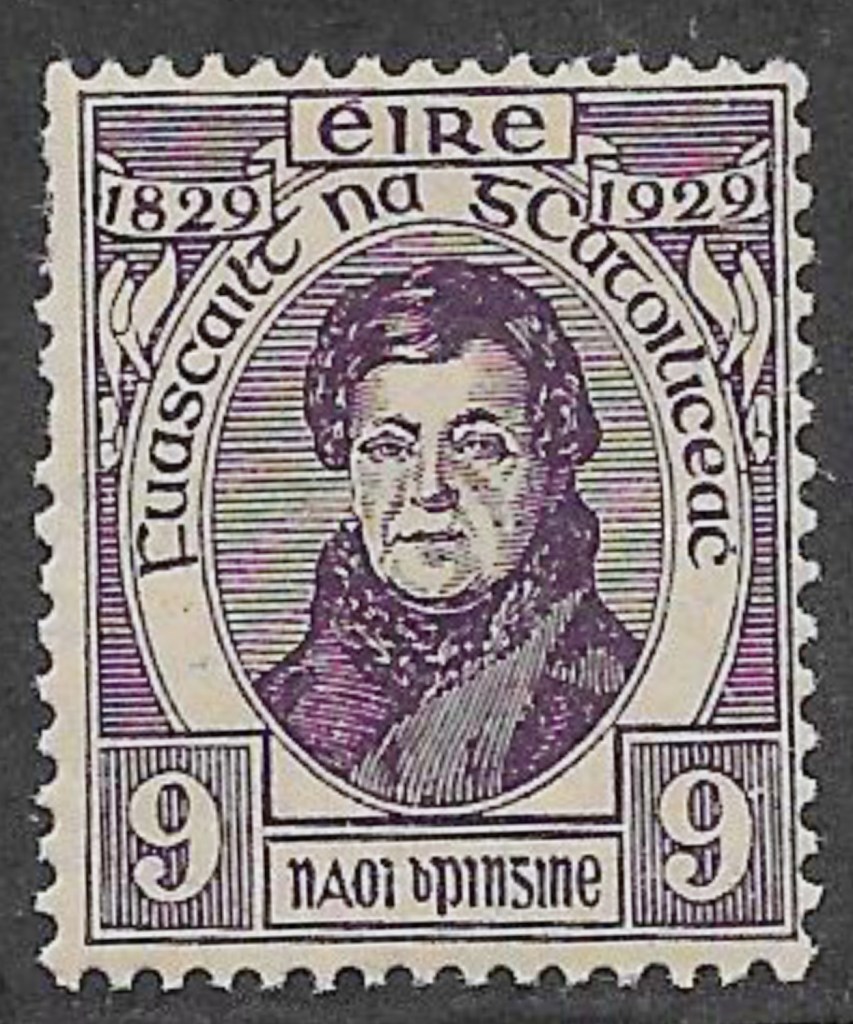
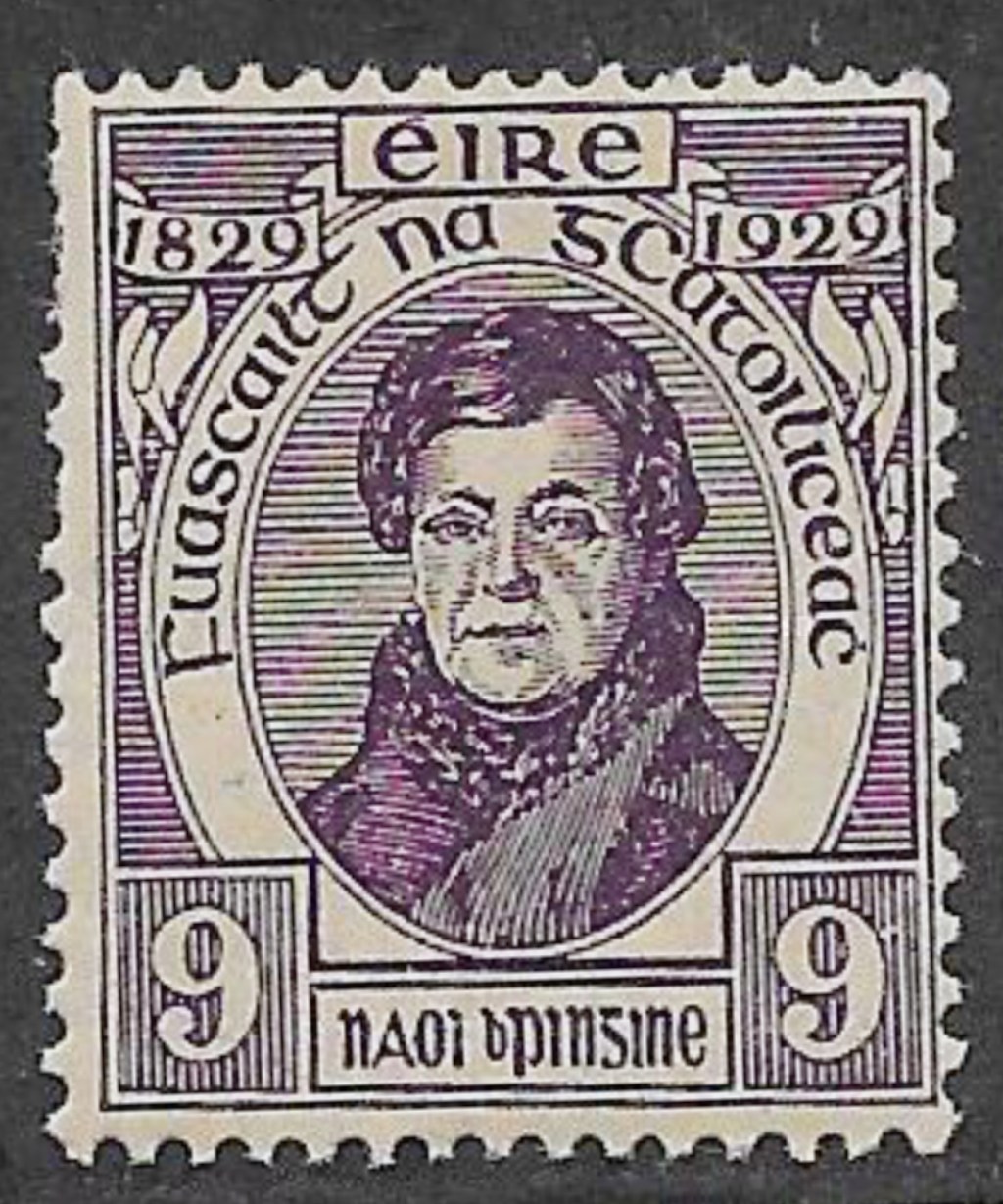
O’Connell was one of the first Irishmen to be immortalized in a set of commemorative stamps issued by the Irish Free State in June 1929. The set of stamps depicted O’Connell, reaffirming his place as a national hero and a pioneer of non-violent resistance. These stamps were symbols of national gratitude and historical remembrance.
Legacy and Lessons
Daniel O’Connell’s influence extended far beyond Catholic Emancipation. He continued to campaign for the repeal of the Act of Union between Great Britain and Ireland. He advocated for Irish self-governance through peaceful means. O’Connell’s approaches inspired future leaders, including Mahatma Gandhi. He cited O’Connell as an influence on his philosophies of non-violent resistance.

The Dublin capital pays homage to O’Connell with the grand O’Connell Monument at the head of O’Connell Street. This imposing structure, crafted from granite and bronze, features a central statue of O’Connell. Unveiled in 1882, it remains a focal point of the city. It serves as a powerful reminder of O’Connell’s enduring legacy in the nation’s heart.
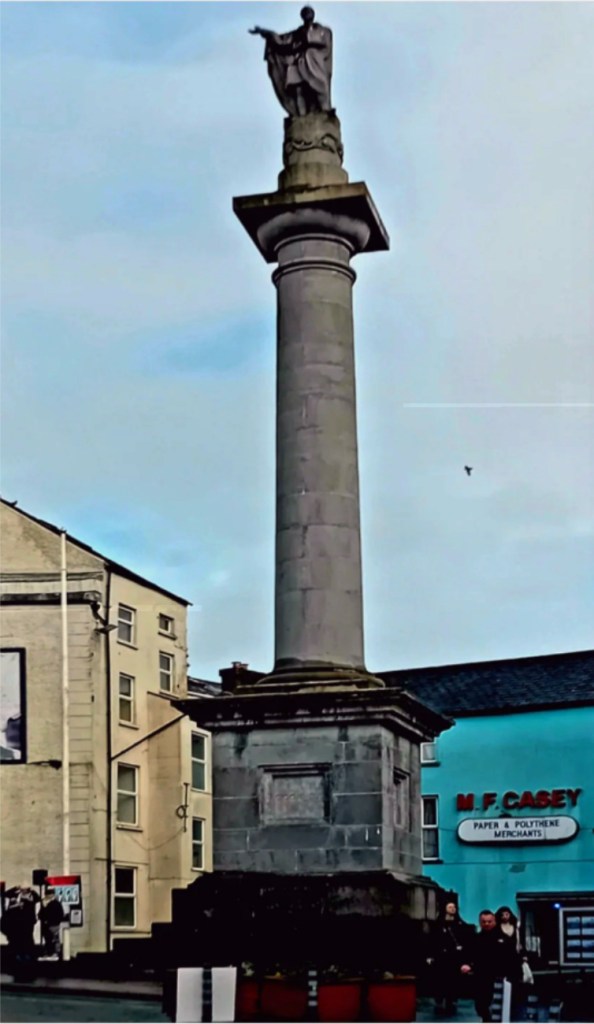
In Ennis, where he won his historic election, a statue of O’Connell stands in the town square. It is a lasting tribute to a man who changed the course of Irish history. He did so without raising a weapon. The monument is a towering column topped with a statue of O’Connell, prominently located in O’Connell Square. The monument not only commemorates his victory in Clare but serves as a symbol of democratic triumph.
Conclusion
Daniel O’Connell’s life and work exemplify the enduring power of peaceful protest, legal reform, and unwavering faith in justice. From the shadows of the Penal Laws to the triumph of Emancipation in Ennis, O’Connell’s story is one of courage, intellect and profound humanity.
The O’Connell Monument in Ennis, located in O’Connell Square, continues to be a site of historical and cultural significance. In 2025, it is featured as a highlight of the Ennis Historic Tour hosted by Western Tours and Tales. The attraction provides visitors with a unique opportunity to engage with the story of The Liberator. They can learn about the peaceful revolution he helped achieve.
As Ireland continues to evolve in the 21st century, the legacy of Daniel O’Connell remains a guiding light. It serves as a reminder that lasting change is possible when pursued with integrity, determination and a commitment to peace.
Article was written with the assistance of AI
 Western Tours and Tales